
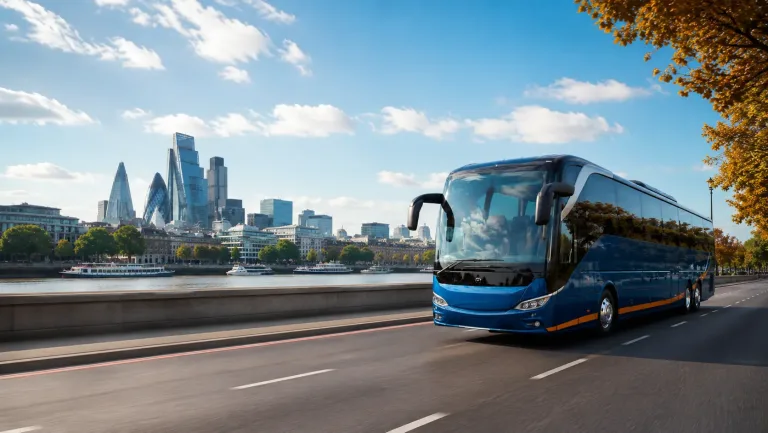
School Transport That Meets Safeguarding Standards
School contracts, daily runs, SEN transport, trips, and safeguarding—compare licensed UK coach and minibus operators.
How Does It Work?

Submit Your Request
Share your trip on the platform. It takes about a minute and costs nothing.

Compare Prices & Services
Operators send you their offers. Compare the prices, vehicles and reviews in one place.

Choose Your Carrier
Pick the operator that suits you and confirm. From there, they handle the journey.
School Transport That Meets Safeguarding Standards
School contracts, daily runs, and the safeguarding every journey needs

Good school transport is arranged long before the first pupil boards in September. In England, local authorities must provide free home-to-school travel once a child lives beyond the statutory walking distance, set at two miles for pupils under eight and three miles from age eight upwards. Many schools, academies and multi-academy trusts buy on top of that, procuring school transport coach and minibus hire directly for routes the council provision doesn't reach. The scale varies enormously. One 16-seat minibus serving a string of outlying villages. A rota of 49- and 70-seat vehicles moving an entire catchment. The questions underneath stay the same: who is driving, and what happens when the usual vehicle can't run. An operator bidding for term-time work should produce an enhanced DBS check for every regular driver, a current PSV operator licence and maintenance records that would stand up to a DVSA inspection. Ask for all of it at tender stage, not after award. Coordinators who insist on the paperwork early filter out weak bidders before a shortlist is ever drawn up.
Daily runs live or die on punctuality. The English school year runs to around 190 pupil days, and a coach that turns up late on even a handful of them means registration chaos and parents on the phone before 9am. Experienced providers plan for this. They build dead mileage and traffic variance into the schedule, park vehicles overnight near the route start and give the school office a named contact rather than a call-centre queue. Here's a useful interview question: how did the operator handle its last breakdown on a live school route? A credible answer involves spare vehicles held nearby, reciprocal cover with partner firms and a defined message cascade to the school. Improvisation isn't an answer. Schools hiring for fixed periods usually pin these expectations down through contract transport agreements, with response times and replacement-vehicle commitments written into the service schedule. Escalation and penalty clauses are cheap to agree at signature. Retrofitting them mid-contract, once something has already gone wrong, is anything but.
Give the vehicle the same scrutiny you give the driver file. Every seat on a coach or minibus used for organised school journeys must carry a working seat belt, and anyone moving younger primary pupils should check belt types and whether booster arrangements suit smaller children on longer trips. Capacity discipline matters too. A 49-seat coach carries 49 belted passengers, and nobody extra squeezed on for a short hop. Emission rules now shape price as well as compliance, since routes touching the London ULEZ or the Clean Air Zones in Birmingham, Bradford and Sheffield favour Euro VI vehicles; a tender should say exactly where each vehicle will operate. Fleet age, wheelchair access, CCTV coverage and first-aid provision all belong in the specification table rather than in a verbal assurance, because the table is what gets audited when awkward questions arrive later. And drivers on regular runs learn things no spec sheet records, such as which gate a school actually uses and where a coach can legally wait at 3.15pm.
Not everything is a fixed route. Operators running morning and afternoon contracts usually have vehicles standing idle between roughly 9.30am and 2.30pm, which is why swimming runs and curriculum-linked day trips and excursions often price well in that mid-day window. On 1Bus.co.uk, school business managers and transport coordinators describe a route or a one-off trip once, then compare structured quotes from licensed UK operators with O-licence details, vehicle ages and driver vetting confirmed in writing rather than assumed. That written trail matters. Quotes and confirmations held in one place are exactly what governors and local authority auditors want to see when pupil travel spending gets reviewed, and assembling the file at booking time beats reconstructing it a year later. Requests come in every shape, an eight-seat vehicle for a small SEN group one week and double-deck coaches for a whole-year move the next. Describe the group honestly, including ages, wheelchair users and luggage, and a quotation becomes a firm price instead of an estimate.
SEN transport, college shuttles, and trips beyond the term timetable
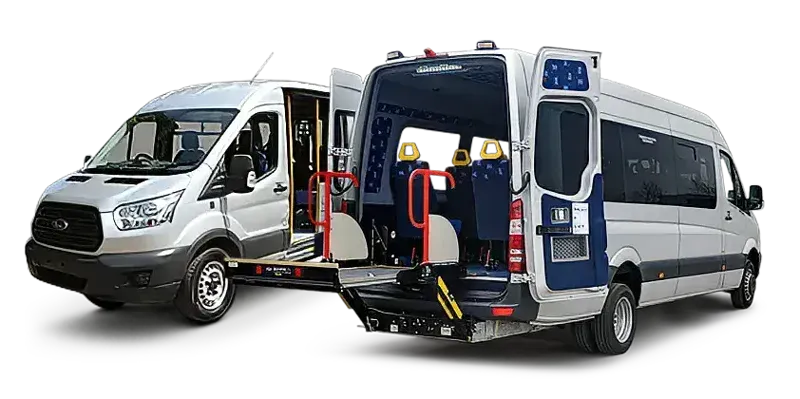
SEN routes are the most tightly specified journeys in the sector, and rightly so. Where a pupil's education, health and care plan names transport as a provision, the vehicle and the driver must match what the plan says, often with a trained passenger assistant on board as well. That might mean a wheelchair lift, securement points, partition seating, or simply the same driver whose face a child recognises every single morning. Consistency is itself a safety feature here. An unfamiliar driver or a substituted vehicle can unsettle passengers with autism or sensory needs, so agree named-driver arrangements and a notification protocol for the changes that can't be avoided. Accessibility questions reach into mainstream work too. Ask whether wheelchair-accessible vehicles can be supplied at short notice for a pupil with a temporary mobility need, and how the operator approaches PSVAR expectations on its larger vehicles. Schools that also arrange travel to therapy sessions will find the overlap with healthcare and care transport useful, because operators from that sector already run DBS-checked, assistance-trained crews as standard. Pricing reflects the extra crew and the specialist vehicle. So check that every bidder has priced the same escort hours and the same securement kit, since the cheapest figure on the page sometimes just omits them. Route risk assessments deserve a review each term, not a filing cabinet.
Colleges and sixth forms generate a different pattern altogether: fewer escorts and bigger vehicles, on timetables that shift by term. A further-education campus pulling students from a twenty-mile radius might need 49- or 53-seat coaches at 8am and 5pm but only a 16-seater for twilight courses, so the ability to flex vehicle size within one agreement stops a budget paying for empty seats. Split-site colleges add inter-campus shuttles at fixed intervals. Exam season compresses tolerance for lateness to zero, because a student who misses a GCSE or A-level paper through a failed shuttle gets no second chance that afternoon. Providers who serve this market well publish live vehicle tracking to a named college contact and hold contingency vehicles near the route rather than at a depot an hour away. Don't accept a general assurance on punctuality. Ask for measured data from a comparable contract, and pay attention to how the question gets answered as much as to the answer itself. Term dates trip shuttles up too. A route serving students from two neighbouring authorities can hit different half-term weeks, and a contract that fixes dates in an appendix avoids the same argument every year. Where demand genuinely can't be predicted, some colleges run a registration-based system so vehicle sizes track real passenger numbers rather than last September's estimate.
Beyond the timetable sit fixtures and residentials. Sports blocks bring Saturday fixture runs and mid-week away matches with kit bags, and the planning rules match those for larger occasions covered under event transport: confirm parking at the destination, name the teacher in charge on the booking and share a passenger manifest with the operator before departure. Residentials add luggage to the sum. A 49-seat coach loses practical capacity fast when every seat comes with a holdall and a sleeping bag, so state luggage volume alongside passenger numbers. Lead time is the cheapest thing a school can spend. Half-term weeks and end-of-year trip windows book out earliest, and schools that confirm vehicles a term ahead see consistently better availability than those ringing round in the final fortnight. 1Bus.co.uk gathers structured quotes from multiple licensed operators for exactly this sort of mixed requirement, so one enquiry can cover the weekly fixture run and the summer residential in a single comparison. Insurance documents and the operator's safeguarding policy should travel with the booking confirmation on every off-site visit, because venues routinely ask trip leaders to produce them. One more question deserves an answer before departure day: does the driver stay with the group at the destination, or return for a later pick-up? It changes the price and the risk assessment alike.
Comparing school transport operators before governors sign off

Procurement has professionalised. Local authority frameworks and multi-academy trusts now award school transport through competitive tender far more often than through an informal phone call, and contracts commonly run for three, five or seven years. That's long enough for a weak award to compound annually. Evaluation panels score price alongside safeguarding evidence, vehicle strategy and contingency planning, and the discipline cuts both ways. A clear specification gets comparable bids back. A vague invitation produces quotes nobody can compare line by line. Renewal preparation belongs in the calendar a full twelve months before expiry, because a retender squeezed into six weeks almost always defaults to the incumbent, on the incumbent's terms. Governors signing off a recommendation should expect the scoring matrix, the unsuccessful bids and the due-diligence file covering licence, insurance, maintenance history and DBS confirmations, not just a winning price on a summary sheet. Framework mini-competitions shorten the process for maintained schools. Academy trusts buying outside a framework still have to evidence value for money under their financial handbook. Either way, put route maps, pick-up points, pupil numbers by stop and the complaints escalation path in the specification itself, because operators price uncertainty as risk, and risk always costs more than clarity does.
Price gaps between bids usually trace back to identifiable variables rather than generosity. Driver wages, fuel, vehicle finance and clean-air-zone charges all move over a multi-year term, and an honest operator explains in its tender how each one is handled, whether that's a fixed price with an indexation formula or a review at defined anniversaries. Be wary of the outlier that undercuts the field by a wide margin. It's frequently followed by variation requests once the contract is live and the school has no easy way out. A transparent quotation itemises driver hours, waiting time, tolls and parking, so an invoice can be checked against the booking without a dispute. Modern fleets back this up with GPS tracking and automated mileage reports, which double as evidence when a parent questions a late arrival. Parents now sit inside the specification themselves. Schools increasingly require named-driver briefings, the registration shared in advance and a defined channel for delay messages, because communication failures reach governors faster than mechanical ones ever do. Fuel mechanisms deserve particular care on longer terms; an adjustment tied to a published index protects both sides, while a bare fixed price tempts a struggling operator to trim the maintenance budget first. And payment terms matter to smaller firms. Schools that pay promptly are, in practice, first in line when vehicles are scarce.
Finally, weigh what else the operator can carry, because schools rarely buy one journey type for long. A language exchange or a ski trip needs an early-morning connection to a major hub, and an operator already handling airport transfers can quote the 4am terminal departure alongside the weekly run without a second procurement exercise. Multi-academy trusts moving staff between sites can fold a staff shuttle into the same relationship, using vehicles and drivers the pupil timetable leaves idle mid-morning. Seasonal pressure points are predictable. September route changes. December concerts. The summer-term spike in trips. A standing relationship with agreed rates beats spot-hiring each occasion separately, and consolidating work with vetted operators cuts admin while sharpening accountability. It only works, though, when the original comparison was wide enough, and that's the gap 1Bus.co.uk closes for school transport coach and minibus hire across the UK. Describe the requirement once. Receive structured quotes from licensed coach and minibus operators, then compare safeguarding evidence, vehicle specification and price side by side before anything reaches a governors' meeting. The best contracts read as boring documents. Every risk anticipated, every response defined, nothing left to negotiate at a roadside at 8.15 on a wet Tuesday morning.
School contract transport quotes
Daily routes for schools, colleges and academies that need term-time reliability

Contract transport is not one-off event hire. It's the same route, run the same way, every week. Organisations lean on it when the journeys keep repeating: daily school runs, staff shuttles between sites, commuter links, care-home appointments, hotel crew transfers, feeder buses from a car park that sits miles from the gate. Book it as a contract and you get a fixed timetable, named vehicles and an operator you can hold to real KPIs instead of chasing excuses.
Contract transport fits almost any repeating pattern. Shift workers heading to a distribution hub. NHS staff moving between hospitals and remote parking. Hotel teams on a rolling rota. Residents who need to reach appointments on time. A multi-month agreement keeps budgeting predictable and spares you the admin of rebooking the same journey forty times over, and it gives the operator room to learn the route before anyone depends on it. So the dedicated services tend to run best on a proper contract: school transport has to survive term-time peaks, staff shuttle transport lives or dies on shift timing, and corporate transport wants one governed framework rather than scattered bookings.
On 1Bus.co.uk, contract enquiries go to operators who actually run scheduled services, not firms that treat every request as a single trip. You set the timetable, the vehicle sizes, the accessibility requirements and the contract length; we match you with vetted coach and minibus partners who already know term-time peaks, shift changes and punctuality reporting. For a lot of organisations that beats running your own fleet or piecing together ad-hoc bookings every week. Tell us what you need on the contract request form (routes, passenger numbers, contract length, access requirements) and we'll put you in front of operators ready to run it long term.
Our Vehicles

8 Seater Minibus
Flexible option for small groups, airport runs and luggage.

16 Seater Minibus
Perfect for medium groups and city travel.

39 Seater Midi Coach
Ideal for school trips, events, and local transport.

60 Seater Coach
Spacious and comfortable for long journeys and large groups.
Coach Hire and Minibus Hire with Driver

One-way or Return Transfers
Clean, well-kept vehicles for one-way or return trips. Plan a group journey in minutes with operators you can check first.

Train Station and Airport Transfers
Airport and station runs timed around your flight or train, at a price you can actually compare.

Hire Bus and Minibus per Hour
Need flexibility? Book a driver and vehicle by the hour, for any group size or occasion.

Complex Journeys
Multi-stop days, sightseeing, corporate itineraries: hire a bus or minibus with a driver and let them handle the route.
Sort your group travel in one go with 1bus.co.uk. Pick the service that fits and get quotes today.
Register NowWhy Choose 1Bus.co.uk?
Save Time
Skip the endless calls and email chains. Post your request in under a minute and let operators come to you with their best price.
Compare & Choose
Line up several quotes side by side. Weigh the price, the vehicle and the reviews, then pick the operator that actually fits the trip.
Free Service
The platform is free to use. No sign-up fee, nothing hidden. You only pay the operator once you confirm the booking.
Trusted Professionals
Operators apply to join and share their licence details before they go live. Real customer reviews help you spot the ones who turn up on time.
Friendly Support
Stuck on something? Our support team answers real questions from real people, no bot loop.
Eco-Friendly Travel
One coach takes a lot of cars off the road. Booking a group vehicle through 1bus.co.uk beats everyone driving separately.