
Port Transfers Sized for Suitcases and Group Deadlines
Cruise terminal transfers, port journeys, hotel-to-terminal runs, and luggage-heavy group travel—compare licensed UK coach and minibus operators in one enquiry.
How Does It Work?

Submit Your Request
Share your trip on the platform. It takes about a minute and costs nothing.

Compare Prices & Services
Operators send you their offers. Compare the prices, vehicles and reviews in one place.

Choose Your Carrier
Pick the operator that suits you and confirm. From there, they handle the journey.
Port Transfers Sized for Suitcases and Group Deadlines
Cruise Terminal Transfers That Treat Sailing Day as a Hard Deadline
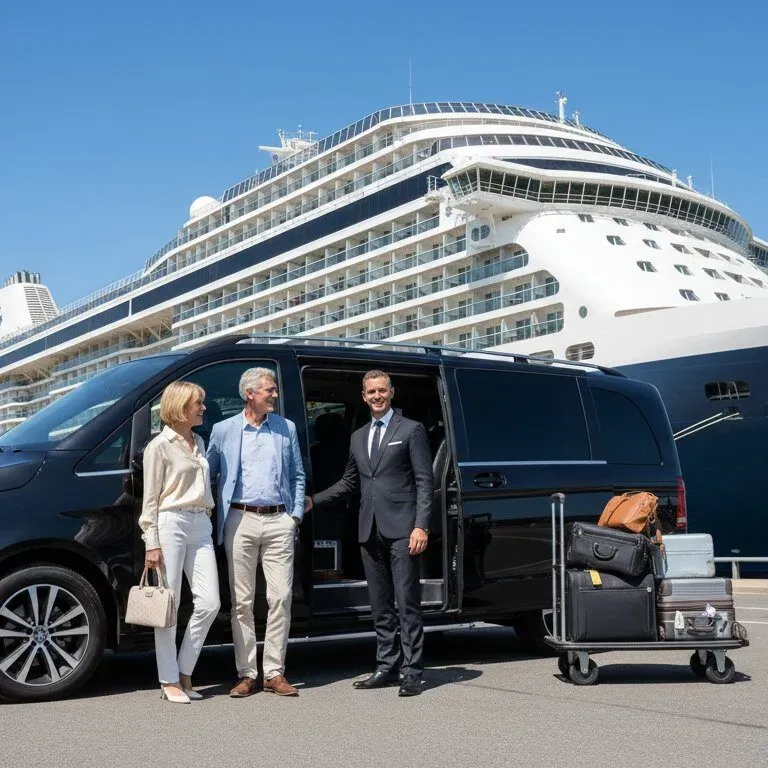
No captain holds a ship for a late minibus. The embarkation window is fixed, check-in desks shut well before the printed sailing time, and the gangway comes up on schedule regardless of what happened on the M27. So cruise terminal transfer coach and minibus hire is rarely a comfort purchase. What you're actually buying is a vehicle with genuine room for every case, a driver briefed on the correct terminal gate, and a pickup time worked backwards from boarding rather than forwards from breakfast. Thirty passengers travelling with sixty cases is a freight job as much as a passenger one. The operators who quote well tend to ask about luggage volume before they ask about the date.
Britain's cruise map is wider than most first-time organisers realise. Southampton runs several separate terminals, Ocean, Horizon, Mayflower and City among them, and a coach sent to the wrong quay can lose twenty minutes looping through dock traffic. Southampton also handles the bulk of UK departures, so its dock roads are the busiest of the lot on a summer Saturday. Then there's Dover's Western Docks, Portsmouth International Port, the London International Cruise Terminal at Tilbury, Liverpool's waterfront berth, Harwich, the Port of Tyne at Newcastle and Greenock on the Clyde. Each has approach roads and security checks of its own, plus a designated coach drop zone that isn't always where the sat nav thinks it is. A quote that names the exact terminal building instead of the port town usually comes from someone who has delivered groups there before. That knowledge earns its keep on turnaround days, when thousands of passengers cross the same quayside in both directions.
Start the vehicle sums with a blunt ratio: one large case and one cabin bag per passenger, minimum. A sixteen-seat minibus copes with a family group only if the baggage goes in a trailer or a second vehicle. A full-size coach with underfloor lockers takes an entire sailing party's cases without anyone nursing a suitcase in the aisle. Groups staying ashore the night before often pair the terminal run with hotel and hospitality transport, so one operator manages the hotel-to-terminal leg and the loading in a single plan. Put the case count in the enquiry. Hold capacity decides the vehicle, not the seat count.
Multi-hotel pickups are where embarkation mornings fall apart. Forty passengers across three hotels needs a timed pickup circuit with honest dwell at every stop; five minutes becomes fifteen once the cases start loading. It also needs a route that dodges the port's arrival crush, which typically peaks late morning on sailing days. An experienced operator sequences the stops so the coach lands inside the group's allocated check-in slot, with a margin built in for the couple who are always last down to the lobby. Two questions sort the serious firms out. How do they handle a missed pickup window? And do the driver's duty hours cover a delayed boarding without creating a rest-break problem on the positioning run home?
Corporate and incentive sailings raise the stakes again. A conference-at-sea group tends to travel with exhibition kit and colleagues converging on the port city at different times, so organisers usually fold the terminal run into wider corporate transport arrangements and get delegates and their freight to the berth in the right order. The fundamentals hold for every group, though. Book early for summer sailings. Get the terminal name confirmed in writing, share the ship's check-in window with the operator, and treat the transfer as part of the holiday instead of an errand tacked onto the front of it. A planned coach arrival means the trip starts at the hotel door. An unplanned one starts with a sprint across a car park behind a wobbling luggage trolley.
Fly-Cruise Airport Legs Planned Around Real Road Distances
Fly-cruise itineraries squeeze two high-stakes journeys into one day, and the road leg in the middle is the bit nobody rehearses. Heathrow (LHR) sits roughly sixty-five miles from Southampton's terminals, about ninety minutes down the M3 when the road behaves and noticeably longer on a Friday afternoon in July. Gatwick (LGW) adds distance again. Southampton Airport (SOU), by contrast, is only a few miles from the dock gates and suits groups arriving on regional connections. What matters isn't the mileage, though. It's the stack of buffers: aircraft doors to baggage reclaim, reclaim to coach bay, coach bay to a check-in desk that closes on schedule. Pre-booked airport transfer coaches that meet the flight, load the hold luggage once and drive straight to the berth strip the riskiest handovers out of that chain. For twenty-five passengers landing at Heathrow ahead of an afternoon sailing, the gap between a coach waiting on the stand and an improvised fleet of taxis is measured in whole hours. On embarkation day, hours are the only currency that counts. Put the flight number in the enquiry too. It lets the operator track delays and shift the pickup quietly, with no flurry of phone calls out of the baggage hall.
The same geometry repeats further north, with different numbers attached. Manchester Airport (MAN) to Liverpool's cruise terminal is around thirty-five motorway miles, which makes the M56 and M62 corridor the standard fly-cruise approach for sailings off the Mersey. Newcastle International (NCL) reaches the Port of Tyne's berth at North Shields in well under an hour. Glasgow Airport (GLA) sits about twenty miles from Greenock Ocean Terminal on the Clyde, and Edinburgh serves ships calling at Rosyth and South Queensferry. Every pairing has a pinch point. The Mersey tunnels at rush hour, say, or the A19 around the Tyne, or bridge traffic on the Erskine approach. A driver who runs these roads weekly prices the journey time honestly instead of optimistically. Groups joining a northern sailing after starting in a southern city sometimes find the coach leg is the longest single segment of the whole holiday. That is exactly why it deserves a proper touring vehicle with reclining seats, an onboard washroom on the longer runs, and a second driver where hours rules demand one. A complete enquiry states four things: the airport, the terminal, the flight arrival time and the ship's final boarding time. With those facts in hand, an operator can commit to a plan instead of a guess.
Disembarkation is the leg organisers under-plan. The pressure feels off, right up until a ship docks at seven in the morning and three thousand passengers compete for one taxi rank. Booking the return coach alongside the outbound run puts a vehicle on the quayside for your group's own self-assist disembarkation slot, usually the earliest walk-off option for parties carrying their own bags. Got a late flight home? Plenty of groups turn the gap into a bonus day and pair the port pickup with day trips and excursions, the New Forest out of Southampton or the waterfront museums in Liverpool, before an evening airport drop. Dover groups often do the same with castle country on the doorstep. Confirm the luggage policy for the return as well, because souvenir shopping turns fifty cases into sixty-five, and a coach that felt snug outbound can be genuinely too small coming back. The return brief is simpler than the outbound one, yet it still needs a named terminal, a realistic walk-off time and a mobile number the driver can actually reach. One booking covering both directions keeps the paperwork simple, keeps the pricing honest, and gives the group a single point of contact for the whole shoreside plan.
Comparing Cruise Transfer Quotes Without the Pre-Sailing Panic
Most group leaders start comparing transfers about a fortnight before sailing. That's precisely when availability tightens and prices firm up. A useful enquiry contains six facts: passenger count, case count, pickup postcode or hotel names, the port and the exact terminal, the ship's boarding window, and a note on the return leg if you need one. Give operators complete information and you'll get back comparable, commitment-ready prices. Send a vague request for a coach to Southampton sometime in June and you'll get placeholders that evaporate once the real details land. Writing the brief once and sending it to several licensed operators through a single request is the quickest way to see the genuine market range for the route, not just one company's opening position.
The price itself moves on a handful of levers, and knowing them makes quotes easier to judge. Distance and drive time set the base. Vehicle size steps the cost wherever a booking outgrows a minibus, then a midi-coach, then a full-size coach. Waiting time at airports or terminals is often charged beyond an included allowance, and summer Saturdays, the classic UK sailing day, carry the season's strongest demand. A quote that looks unusually cheap has usually left something out. Most often it's the waiting allowance, or the positioning mileage for a vehicle that starts its day a long way from your pickup point. Ask each operator to confirm in writing what happens if the ship or the inbound flight runs late. The answer tells you more about their reliability than any headline figure will.
Occasion shapes the brief more than organisers expect. A three-generation family reunion travels differently from a hen party at sea. A celebration group sailing out of Southampton wants music on board and a relaxed pickup; a golden-anniversary party wants low steps and patient loading. Couples marrying on board or in a port city increasingly book their guest logistics as wedding transport, with the terminal run woven into a wider plan covering the ceremony and the guest hotels. And if your group includes wheelchair users or passengers with limited mobility, say so at enquiry stage. Accessible vehicles with lifts exist across the UK fleet, but they're scarcer than standard coaches and the first to book out in peak season.
Cruise travel is habit-forming, and the person who organises one group sailing usually ends up organising the next. Travel agents, cruise clubs and social groups running several departures a season often move beyond one-off bookings into contract transport, fixing rates and guaranteeing vehicles across a programme of sailing dates instead of re-tendering every trip. The gains stack up fast: drivers who already know the group's loading routine, and a single seasonal invoice in place of a dozen scattered payments. Even a group sailing twice a year does better by mentioning the second date up front. A quote priced for a repeat customer is usually sharper than one priced for a stranger.
The closing checklist is short. Confirm the terminal name in writing. Share the ship's boarding time and any flight times, state cases as well as passengers, reserve accessible or oversized vehicles early, and lock in the return leg together with the outbound. The UK sailing season concentrates between May and September, and coach availability in the port cities tightens in step with it. Compare quotes in winter and you choose off the whole market; leave it until the final fortnight and you choose off whatever's left. Treat cruise terminal transfer coach and minibus hire as the first booking of the holiday rather than the last errand before it, and embarkation day becomes what it should be: a short queue, then a drink on the sun deck while somebody else worries about the parking.
Our Vehicles

8 Seater Minibus
Flexible option for small groups, airport runs and luggage.

16 Seater Minibus
Perfect for medium groups and city travel.
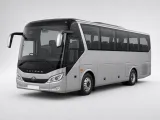
39 Seater Midi Coach
Ideal for school trips, events, and local transport.
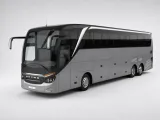
60 Seater Coach
Spacious and comfortable for long journeys and large groups.
Coach Hire and Minibus Hire with Driver

One-way or Return Transfers
Clean, well-kept vehicles for one-way or return trips. Plan a group journey in minutes with operators you can check first.

Train Station and Airport Transfers
Airport and station runs timed around your flight or train, at a price you can actually compare.

Hire Bus and Minibus per Hour
Need flexibility? Book a driver and vehicle by the hour, for any group size or occasion.

Complex Journeys
Multi-stop days, sightseeing, corporate itineraries: hire a bus or minibus with a driver and let them handle the route.
Sort your group travel in one go with 1bus.co.uk. Pick the service that fits and get quotes today.
Register NowWhy Choose 1Bus.co.uk?
Save Time
Skip the endless calls and email chains. Post your request in under a minute and let operators come to you with their best price.
Compare & Choose
Line up several quotes side by side. Weigh the price, the vehicle and the reviews, then pick the operator that actually fits the trip.
Free Service
The platform is free to use. No sign-up fee, nothing hidden. You only pay the operator once you confirm the booking.
Trusted Professionals
Operators apply to join and share their licence details before they go live. Real customer reviews help you spot the ones who turn up on time.
Friendly Support
Stuck on something? Our support team answers real questions from real people, no bot loop.
Eco-Friendly Travel
One coach takes a lot of cars off the road. Booking a group vehicle through 1bus.co.uk beats everyone driving separately.