
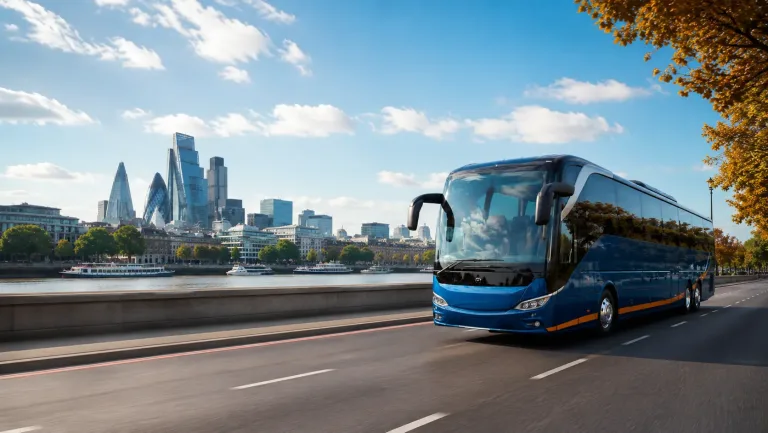
Rail Replacement Transport When Trains Cannot Run
Rail replacement coaches and replacement bus services for planned works and disruption—compare licensed UK operators.
How Does It Work?

Submit Your Request
Share your trip on the platform. It takes about a minute and costs nothing.

Compare Prices & Services
Operators send you their offers. Compare the prices, vehicles and reviews in one place.

Choose Your Carrier
Pick the operator that suits you and confirm. From there, they handle the journey.
Rail Replacement Transport When Trains Cannot Run
Rail replacement coaches when engineering works close the line
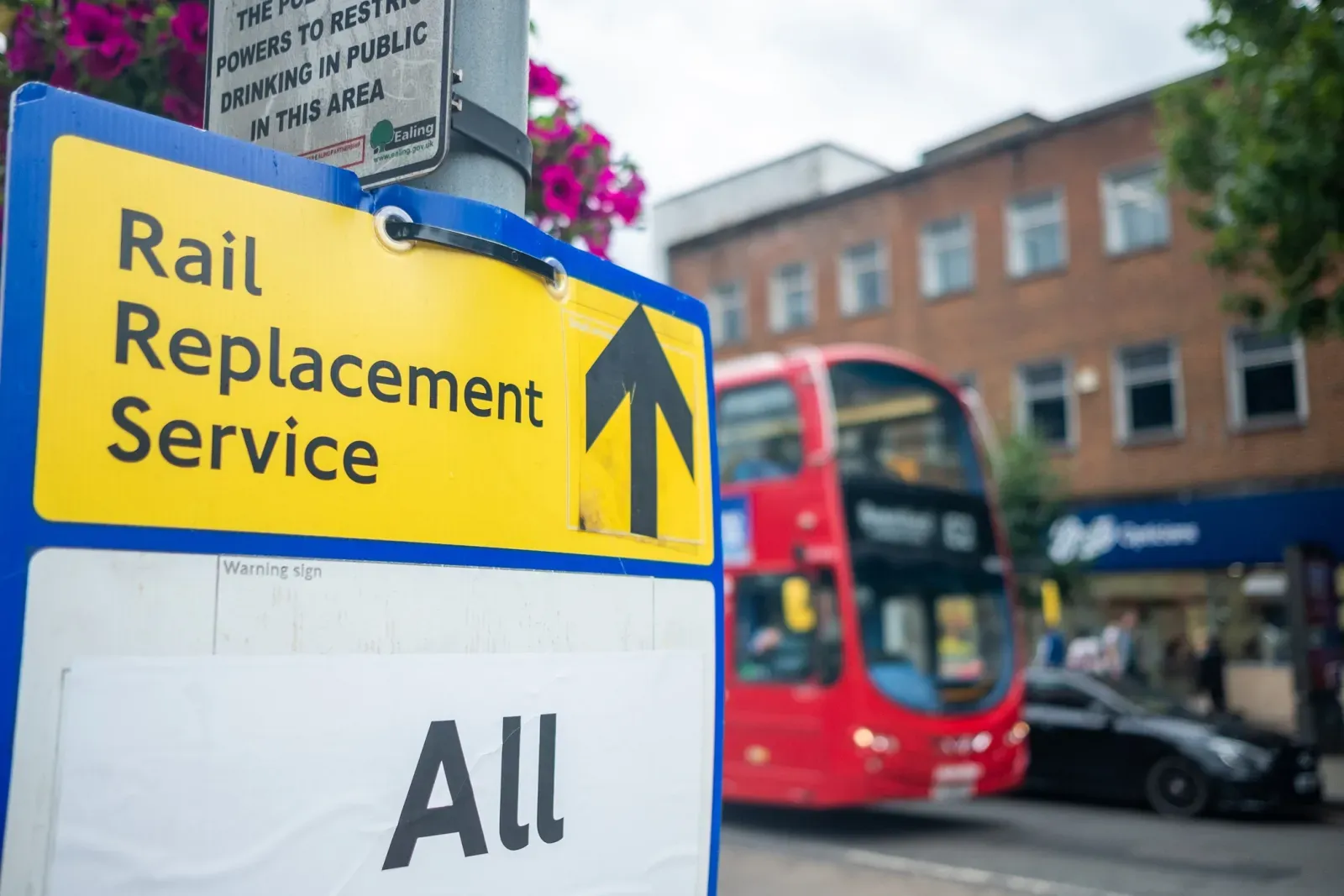
The trains stop. The passengers don't. That is the whole problem rail replacement coach and minibus hire exists to solve, and it splits into two very different jobs. Planned engineering possessions are booked months out, usually over weekends and holiday blockades, which gives organisers time to design a timetable, walk the station forecourts and brief drivers on where they'll actually stop. Emergency cover works the other way round. A landslip or a bridge strike can shut a route inside an hour, and the operators who win that work are the ones already holding standby vehicles and rested drivers when the phone rings. The industry calls all of this bustitution, an ugly word for a precise discipline: keeping a closed railway's promise to its passengers by road. Strike days sit awkwardly between the two patterns. There's some notice, rarely enough certainty to lock a plan early, so they reward clients who already know which operators can scale quickly. Both kinds of work rest on the same base, though. Licensed vehicles and legal driver hours, plus a timetable passengers can actually trust. But planned and emergency work load the planning effort so differently that experienced suppliers quote for them separately rather than pricing one generic shuttle, and a client who asks for a single blended rate is usually asking the wrong question before the conversation has even started.
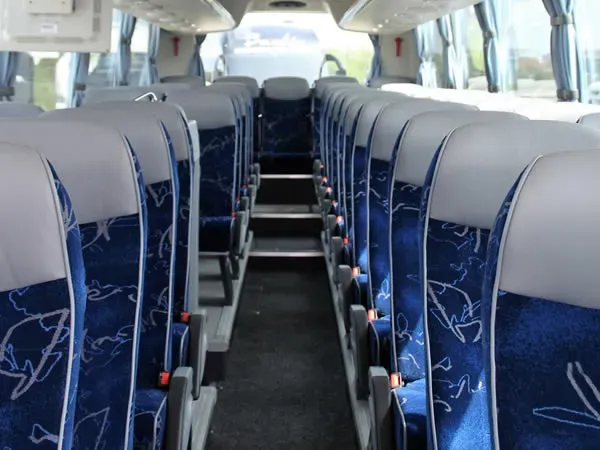
Vehicle choice decides whether a service absorbs a trainload or strands half of it on the platform. A modern full-size coach seats somewhere between 49 and 57 passengers, with 70-seat and double-deck options for heavy commuter flows; midicoaches in the 25 to 35 seat bracket suit branch lines and quiet off-peak diagrams. Then there's the small end. 16-seat minibuses cover late-evening trips, short station-to-station hops and accessible door-to-door journeys for passengers who can't manage a coach step. Accessibility isn't a nice-to-have here. PSVAR, the Public Service Vehicles Accessibility Regulations, applies to scheduled rail replacement, so every served station needs either a wheelchair-accessible vehicle with a lift or ramp and proper securement points, or a compliant alternative arranged in advance. Luggage catches planners out more often than almost anything else. Rail passengers travel heavy: suitcases, pushchairs, the odd folding bike. A coach with deep underfloor lockers keeps dwell times short where a minibus queue backs up badly. Train operating companies running recurring engineering programmes tend to skip the per-possession haggle altogether and set up contract transport frameworks that hold agreed vehicle numbers and rates on call. And the right answer for a given closure is almost never one vehicle type. It's a mix, sized trip by trip against what each departure is realistically expected to carry on the day.
1Bus.co.uk makes the procurement itself faster. You describe the closure (stations, dates, frequency, expected passenger volumes) and licensed UK coach and minibus operators come back with quotes you can set side by side. Every operator on the platform holds a valid PSV operator licence, and you're free to ask for insurance certificates, maintenance records and driver credentials before you award a thing. That scrutiny matters more in rail replacement than in almost any other hire, because the client is often a train operating company or its agent, answerable to a regulator and to thousands of delayed passengers at once. Comparing several proposals also exposes differences a single quote would hide. One operator bundles route-learning runs and standby cover into the headline price. Another holds newer Euro VI vehicles that clear the clean-air zones on the diverted route. A third offers dedicated controllers at the busiest stations. The same firms frequently run staff shuttle services for depots and offices, which helps when engineering work displaces railway staff as well as passengers. You stay in control the whole way through: review the proposals, ask the awkward questions, and confirm only once the plan and the price both stand up to scrutiny. That holds for a two-coach Sunday shuttle just as it does for a fleet covering an entire route for a fortnight.
Replacement bus services and multi-vehicle coordination
A credible replacement timetable starts with the stopping pattern, and most closures need it layered: express coaches running non-stop between the principal stations to protect journey times, plus all-stations shuttles picking up the smaller halts in between. Road journeys bear little resemblance to rail ones. A fifteen-minute train ride can turn into forty minutes of congested streets, so planners work backwards from realistic drive times and pad each end with recovery margin instead of publishing a schedule the traffic will destroy by nine in the morning. Station infrastructure shapes the plan just as much. Some forecourts take a double-decker without fuss; others force coaches onto nearby streets, which means agreeing temporary stops with the highway authority, signing the walking route and briefing station staff so nobody is left hunting for an unmarked bus. Dwell time, the minutes a vehicle sits loading at each stop, quietly wrecks more replacement timetables than anything else, and disciplined queueing with clearly branded vehicles is what keeps it down. If the closure lands on the same weekend as a big fixture or concert on that corridor, demand can double without warning. Organisers borrow from event transport planning when that happens: staged departures, marshals at the stops, overflow vehicles held nearby. The plan should also name its decision-makers. A timetable nobody is empowered to amend at short notice is a plan for the first hour only.
Behind the timetable sits the legal machinery. Drivers' hours rules govern all of it, and a service running from first train to last can't be delivered on one shift. Operators have to roster relief drivers, plan changeover points and build in breaks, which is why a credible quote itemises driver provision instead of burying it. Multi-vehicle coordination is the next differentiator. A serious closure might draw fifteen or twenty vehicles from several depots, marshalled by radio-equipped controllers at the key stations and tracked by GPS so the control room spots gaps forming before passengers do. Ask a prospective operator how they handled their last multi-vehicle possession. The specific answer tells you more than any brochure will. Then there's contingency. A spare vehicle positioned mid-route, an on-call fitter and an agreed breakdown protocol stop one mechanical failure unravelling the whole diagram, and a quote without them is cheaper right up until Saturday morning. Route learning matters too. Drivers who've never seen a corridor miss stops and lose time, so good suppliers drive it in advance, log the low bridges (a genuine hazard for double-deckers on diverted roads) and record approved turning points. None of this is exotic. It's simply the ground that separates operators who deliver replacement work week in, week out from those improvising on the day, and it's exactly what a procurement conversation should cover before anyone so much as mentions price.
Passenger experience is what people remember afterwards. Clear, consistent signage at every stop matters. So do drivers briefed to accept rail tickets without an argument, and real-time information feeding the journey planners passengers actually check on their phones. Those basics carry far more weight than onboard extras ever will. Connections deserve particular care, because plenty of rail journeys end at an airport, and a coach that misses the last check-in window has failed no matter how comfortable the ride was. Closures on airport corridors are therefore often planned alongside dedicated airport transfer services, with generous margin built into the schedule. Vulnerable passengers need explicit provision as well: assistance-booked travellers and people with reduced mobility should be met by a named person, not merely accommodated by a policy document. Weather is the last variable. Engineering blockades cluster around Christmas and Easter, precisely when ice, floods and high winds are hammering the road network too, so a winter possession justifies a conservative timetable and somewhere warm to wait at exposed stops. Once the service winds up, the review starts. Punctuality data, loadings by trip and complaint logs all feed the next possession's plan, and operators who volunteer that data unprompted are usually the ones worth keeping across a whole engineering programme. Small courtesies compound too. A driver who knows which exit leads to the taxi rank turns a disrupted journey into a managed one.
Comparing rail disruption operators on 1Bus.co.uk
Rail replacement is unforgiving procurement, so compare operators on evidence rather than promises. The paperwork comes first: a valid PSV O-licence with enough authorised vehicles, current insurance, maintenance inspection records and, where services carry school-age passengers, the appropriate driver checks. Next, the fleet behind the quote. Check vehicle ages, PSVAR compliance across the vehicles actually offered rather than the fleet in general, luggage capacity, and how the offered vehicles fare against clean-air-zone standards on the diverted route. Track record is the third test, and it shows fast. An operator who has delivered possessions for train operating companies will talk fluently about diagram sheets, stand allocations and last-service guarantees. One who hasn't will talk about coaches. References from previous rail clients are reasonable to request and unremarkable to provide, so treat any reluctance as information in itself. Finally, weigh the soft evidence. How quickly did the operator respond? Did the quote name your stations, or read like a template? Did anyone ask the questions a competent planner would ask, about forecourt access, expected loadings, what happens after the last train? On 1Bus.co.uk those signals surface naturally, because several licensed operators answer the same brief and the gap between a considered proposal and a copy-paste one becomes obvious within a day.
Pricing follows the shape of the work. Duration and driver hours dominate the sums: an all-day service from first to last train burns through multiple shifts, so it costs materially more than a peak-only shuttle, and overnight or Sunday working adds unsocial-hours premiums on top. Vehicle size is the next lever. A 70-seat coach and a 16-seat minibus sit far apart in operating cost, and the cheapest compliant answer usually blends both across the timetable rather than defaulting to one type. Standby and contingency carry a price worth paying, because the quote with no spare vehicle looks cheaper on paper and turns expensive the first time a coach fails during a Saturday possession. Get each operator to itemise mileage, waiting time, tolls and positioning runs so you're comparing like for like rather than guessing at what's been left out. Recurring disruption changes the maths again. Engineering programmes that run across school terms push families onto the roads, and councils sometimes procure parallel school transport services for the affected weeks. Employers along a blockaded commuter corridor increasingly sort out corporate transport to keep staff moving too. Operators serving those adjacent markets often hold exactly the spare capacity a rail replacement planner needs at the margins of the day. One more reason to canvass a broad field instead of drifting back to a single incumbent out of habit.
A strong request produces strong quotes, so hand operators the facts they price against. Set out the stations to be served, the dates and daily operating hours, the frequency required in each period, expected passenger volumes if the rail operator can share them, and any known constraints such as forecourt sizes, low bridges, clean-air zones and stands already agreed. Say plainly if the requirement is a planned possession with weeks of notice or emergency standby cover, because the two are resourced and priced quite differently. Lead time is the honest currency of this market. Four to six weeks ahead of a multi-vehicle weekend possession, the pool of available vehicles runs deep; asking on Thursday for Saturday shrinks it sharply, although operators do keep emergency capacity back for genuine short-notice incidents. When proposals land through 1Bus.co.uk, read them in the round. Fleet offered, driver provision, contingency plan, price. Ask follow-up questions before committing, because a good operator answers precisely and a weak one answers vaguely, and that difference is visible long before any contract gets signed. The model scales in both directions: a single Sunday shuttle between two stations works, and so does a season-long blockade needing coordinated coach and minibus fleets. Either way the planning evidence lands in front of you first, and the award decision stays entirely yours.
Our Vehicles

8 Seater Minibus
Flexible option for small groups, airport runs and luggage.

16 Seater Minibus
Perfect for medium groups and city travel.
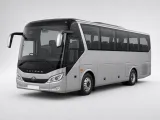
39 Seater Midi Coach
Ideal for school trips, events, and local transport.
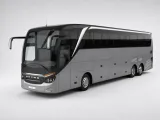
60 Seater Coach
Spacious and comfortable for long journeys and large groups.
Coach Hire and Minibus Hire with Driver

One-way or Return Transfers
Clean, well-kept vehicles for one-way or return trips. Plan a group journey in minutes with operators you can check first.

Train Station and Airport Transfers
Airport and station runs timed around your flight or train, at a price you can actually compare.

Hire Bus and Minibus per Hour
Need flexibility? Book a driver and vehicle by the hour, for any group size or occasion.

Complex Journeys
Multi-stop days, sightseeing, corporate itineraries: hire a bus or minibus with a driver and let them handle the route.
Sort your group travel in one go with 1bus.co.uk. Pick the service that fits and get quotes today.
Register NowWhy Choose 1Bus.co.uk?
Save Time
Skip the endless calls and email chains. Post your request in under a minute and let operators come to you with their best price.
Compare & Choose
Line up several quotes side by side. Weigh the price, the vehicle and the reviews, then pick the operator that actually fits the trip.
Free Service
The platform is free to use. No sign-up fee, nothing hidden. You only pay the operator once you confirm the booking.
Trusted Professionals
Operators apply to join and share their licence details before they go live. Real customer reviews help you spot the ones who turn up on time.
Friendly Support
Stuck on something? Our support team answers real questions from real people, no bot loop.
Eco-Friendly Travel
One coach takes a lot of cars off the road. Booking a group vehicle through 1bus.co.uk beats everyone driving separately.